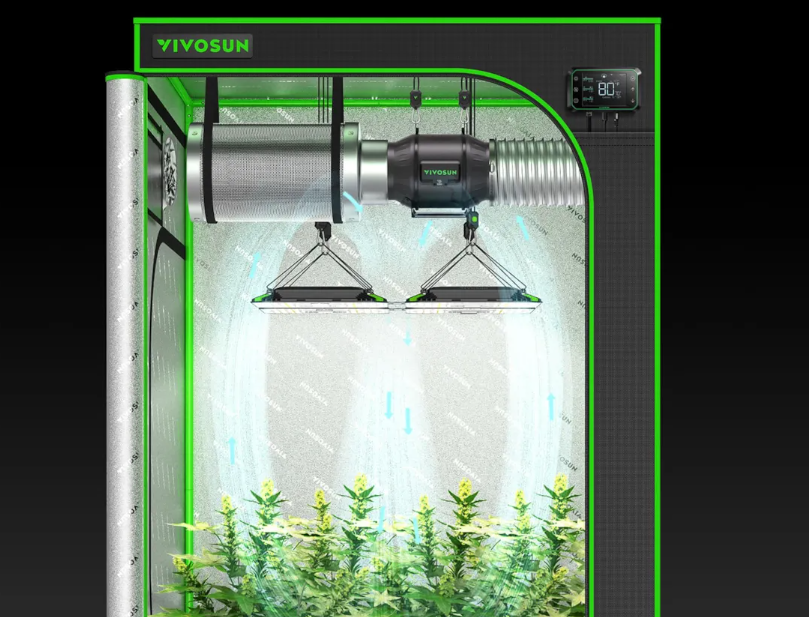
A carbon filter only works as well as its weakest component, and that's usually the part growers forget to maintain: the pre-filter. Cleaning it regularly protects airflow and extends the life of the activated carbon inside — but cleaning the wrong part, or cleaning it the wrong way, can quietly ruin the filter's ability to control odor. Here's how a carbon filter is built, what actually needs cleaning, and what to leave alone.
The part of a grow tent carbon filter that needs regular cleaning is usually the pre-filter, not the activated carbon itself. Clean or replace the pre-filter when it becomes visibly dirty, keep the outer casing free of dust, and replace the filter when odor control declines or the manufacturer’s recommended service life has been reached.
How Does a Carbon Filter Work?
A grow tent carbon filter is built from three parts that each do a different job:
- Pre-filter — a removable fabric or Velcro sleeve on the outside of the filter that catches dust, pollen, and larger debris before it reaches the carbon.
- Activated carbon — the core of the filter. Its surface is covered in microscopic pores that trap and hold odor-causing gas molecules as air passes through.
- Outer casing — the metal housing that holds everything together and directs airflow through the unit.
Air is pulled through the pre-filter first, which strips out dust and larger particles. It then moves through the activated carbon layer, where odor molecules bond to the carbon's porous surface and stay there. On something like the VIVOSUN 4-Inch Air Carbon Filter, this looks like a Velcro pre-filter wrapped around a steel canister packed with RC412-grade virgin Australian activated charcoal rated at 1200+ IAV. A higher iodine adsorption value generally indicates a higher adsorption capacity under the test conditions, although actual odor-removal performance also depends on factors such as humidity, airflow, carbon bed depth, and the type of compounds being filtered.
What Affects Carbon Filter Performance?
Several factors determine how well a carbon filter performs and how long it lasts before it needs replacing:
- Activated carbon quality — denser, higher-grade carbon (like virgin coconut-shell or hardwood-derived carbon) has more micropores and adsorbs more odor molecules than lower-grade or reprocessed carbon.
- Pre-filter condition — a clogged or saturated pre-filter restricts airflow and forces the fan to work harder, which can reduce overall filtration efficiency.
- Airflow — filters are rated for a specific CFM range. Running air through a filter too fast reduces contact time with the carbon; too slow wastes fan capacity.
- Humidity — high humidity can reduce the adsorption performance of activated carbon because water vapor can compete with some target compounds for adsorption sites.
- Odor load and usage — heavier-odor plants, denser grow setups, and longer daily runtimes all use up carbon's adsorption capacity faster.
Why Should You Clean and Maintain a Carbon Filter?
- Maintain filtration efficiency — a clean pre-filter keeps air moving freely into the carbon layer, so the carbon can do its job.
- Prevent dust buildup — dust that settles on the outer casing or clogs the pre-filter reduces airflow over time.
- Extend the service life of the filter — protecting the carbon from excess dust and moisture helps it reach its full expected lifespan instead of failing early.
- Reduce airflow and system issues — a restricted filter forces your inline fan to work harder, which can strain the motor and increase noise.
Keeping the filter and ventilation system free of excessive dust buildup helps maintain proper airflow and keeps the whole system running as designed.
How to Clean a Carbon Filter
Step 1: Remove the pre-filter
Turn off the inline fan and disconnect the filter from the ducting. Unwrap or unzip the pre-filter sleeve from the outer casing.
Step 2: Clean or replace the pre-filter
Hand-wash or machine-wash the pre-filter in cool water, or swap it for a new one if it's inexpensive to replace and heavily soiled. This is the only part of the filter that's safe to get wet.
Step 3: Clean the outer surface
Wipe down the metal casing with a dry or slightly damp microfiber cloth, or use a soft brush for dust caught in seams and vents. Do not let water reach the activated carbon inside — moisture is one of the fastest ways to degrade a carbon filter's performance.
Step 4: Dry and reinstall the pre-filter
Let the pre-filter air-dry completely before putting it back on. Reinstalling it while still damp can trap moisture against the filter and encourage mold or mildew growth.
Can I Clean Activated Carbon?
Generally, no. The activated carbon inside a grow tent carbon filter isn't designed to be cleaned or reused once it's exhausted.
Why can't you wash activated carbon?
- Water can interfere with the carbon's adsorption surface, reducing its ability to capture odor molecules.
- Rinsing doesn't remove the pollutants already bonded to the carbon — it just adds moisture on top of them.
- Wet carbon adsorbs water vapor instead of odor molecules, so filtration performance drops even after it dries.
- Reactivating spent carbon requires controlled heat treatment that isn't practical or safe to do at home.
Once the carbon's pores are saturated, cleaning won't restore its capacity — replacing the filter is the only reliable fix.
Common Carbon Filter Cleaning Mistakes
Reinstalling a Wet Pre-filter
Putting a damp pre-filter back on traps moisture against the casing, which can lead to mold, mildew, and musty odors that undo the filter's job.
Washing the Activated Carbon
Rinsing, soaking, or spraying activated carbon does not reliably restore its adsorption capacity. Water can interfere with adsorption, while ordinary washing does not remove all of the compounds that have accumulated in the carbon. Once the carbon is exhausted, replacement is generally more practical than washing.
Ignoring Dust Buildup
Letting dust accumulate on the pre-filter or casing gradually restricts airflow, forcing the fan to work harder without you noticing until noise or heat becomes a problem.
Waiting Until Odors Become Noticeable
If odors become noticeable outside the grow tent, check the pre-filter, airflow, duct connections, and filter condition. If these are working properly and odor control has still declined, the activated carbon may be nearing the end of its service life.
How do I know when to replace a carbon filter?
The clearest sign is odor escaping the tent or room despite a clean pre-filter and normal airflow. That means the carbon's adsorption capacity is used up. A steady drop in airflow, even after cleaning the pre-filter and casing, is another sign the filter needs replacing.
FAQ
How often should you clean a carbon filter?
Pre-filter: Check every 2–4 weeks and clean whenever it looks visibly dusty.
Outer surface: Wipe down whenever dust accumulates, roughly on the same schedule.
Activated carbon: Never wash it routinely — it isn't a cleanable component.
Entire filter: Replace it once odor control noticeably drops, or follow the manufacturer's stated service-life guidance for your specific model.
How long does a carbon filter last?
There is no universal replacement interval for every carbon filter. Service life depends on the amount and quality of activated carbon, humidity, airflow, odor concentration, and how frequently the filter is used. A filter may last through a full grow cycle under some conditions, but heavier odor loads or high humidity can shorten its service life.
How do I extend the life of a carbon filter?
Keep humidity in your grow space within a normal range, avoid running airflow above the filter's rated CFM, clean or replace the pre-filter regularly, and keep dust from building up on the outer casing. Reducing unnecessary strain on the carbon layer is the main lever you have, since the carbon itself can't be recharged.
How do I know when to replace a carbon filter?
The clearest sign is odor escaping the tent or room despite a clean pre-filter and normal airflow. That means the carbon's adsorption capacity is used up. A steady drop in airflow, even after cleaning the pre-filter and casing, is another sign the filter needs replacing.
Can you reuse activated carbon?
Not in a practical, at-home sense. Once activated carbon is saturated, restoring its adsorption capacity requires industrial reactivation processes (typically high-heat treatment) that aren't feasible to replicate outside a controlled facility. For home and grow-tent use, replacement is the standard solution.